Congratulations, You've Raised a Cartman: The Participation Trophy Generation Comes Due
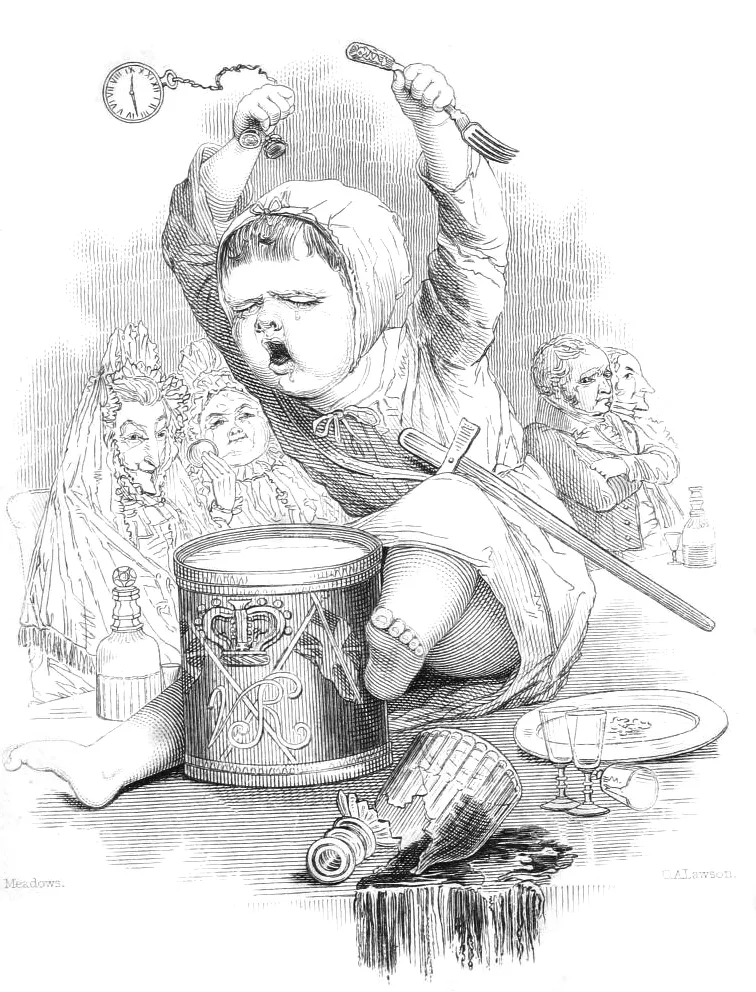
Photo: Meadows, illustrator; O. A. Lawson, engraver, Public domain, via Wikimedia Commons
Let's talk about Liane Cartman for a second, because she deserves more analytical attention than she typically receives.
Liane is, by any reasonable measure, a devoted mother. She loves her son completely, expresses that love constantly, and has organized her entire existence around his comfort and satisfaction. She never says no with any conviction. She interprets his behavior charitably regardless of the evidence. She absorbs his manipulation, his cruelty, and his spectacular ethical failures and responds, reliably, with another batch of Cheesy Poofs and a gentle smile.
She is also, and this cannot be stated gently enough, the primary reason Eric Cartman is the way Eric Cartman is.
And here is the thing that should make every parent in America slightly uncomfortable: Liane Cartman is not a cartoon exaggeration of bad parenting. She is a cartoon exaggeration of the parenting philosophy that has dominated American child-rearing for roughly the last twenty-five years. She just commits to it more thoroughly than most.
The Trophy Shelf That Broke a Generation
The participation trophy arrived with good intentions, as most instruments of cultural damage do. The idea was sound in the abstract: children need encouragement, early experiences of failure can be discouraging, and the competitive framework of youth sports perhaps places excessive emphasis on outcomes rather than development.
Fair enough. Reasonable people can debate how much winning should matter to a seven-year-old.
But something happened in the translation from theory to practice. The participation trophy stopped being a symbol of effort and became, instead, a promise — a quiet, persistent, entirely false promise that the world would continue to recognize your presence as its own reward. That showing up was sufficient. That the feeling of deserving something was equivalent to the thing itself.
Cartman operates entirely within this framework. He doesn't want to earn things. He wants things — immediately, completely, and with the full conviction that wanting them is justification enough. The gap between desire and entitlement doesn't exist for him because no one ever made him experience it.
Liane gave him the trophy every time.
Consequences: A Horror Story
The modern parenting literature has a complicated relationship with consequences. Not the concept — everyone agrees, in principle, that children should learn that actions produce outcomes. The complication is in the execution, which tends to break down along a predictable fault line: consequences are excellent in theory and devastating in practice, because in practice, they require the parent to tolerate the child's distress without immediately resolving it.
This turns out to be very hard. Children are distressed loudly, persistently, and in public places. Their distress activates biological responses in parents that are essentially impossible to fully override. And so the consequence gets softened, delayed, forgotten, or quietly converted into a conversation about feelings that concludes with ice cream.
Cartman has never experienced a consequence that held. Every punishment dissolves. Every boundary negotiates. Every firm parental stance eventually reveals itself as an opening position.
He learned this early and has applied it ever since. When he wants something, he escalates until the discomfort of his escalation exceeds the discomfort of simply giving him what he wants. It works every time. It works because Liane taught him it would.
This is not a parenting strategy. It is a hostage negotiation in which the hostage-taker is eight years old and the hostage is parental peace of mind.
Always Believing Your Kid's Version
Here is a data point worth considering: Cartman's mother has, in recorded history, never once concluded that her son was the primary architect of a situation that went badly. There is always an explanation. There is always context. There are always other children who contributed to the dynamic, teachers who misread the situation, circumstances that made his behavior understandable if not quite defensible.
This is not unique to animated Colorado.
The school administrator who has delivered difficult news about a child's behavior to a parent knows this experience intimately. The moment where the parent — who arrived with every intention of hearing the full picture — gradually, visibly, recalibrates toward the version of events in which their child is either blameless or at least the least culpable party. The version that requires the least revision of the internal story they carry about who their child is.
Cartman is a monster, in part, because no one with authority over him has ever looked him in the eye and said: you did this, it was wrong, and there will be a real cost. Not Liane. Not the school. Not the community that keeps absorbing his behavior and moving on.
We have built an entire infrastructure for avoiding that conversation.
The Mini-Tyrant Pipeline
The output of these combined forces — consequence-free childhoods, validated feelings as a substitute for corrected behavior, adults who cannot tolerate their children's distress long enough to let a lesson land — is not subtle. You can see it in any number of contexts: the college student who emails a professor about a grade with the confidence of someone issuing a correction rather than requesting a review. The young professional who responds to critical feedback with HR paperwork. The adult who, when things go wrong, immediately and instinctively begins constructing a narrative in which they are the victim of circumstances rather than the author of outcomes.
These are not bad people. They are people who were never given the tools to process being wrong, because the adults around them found it too painful to watch them struggle with it.
They are, in the technical sense, Cartmans. Smaller, less theatrical, and without the theme music — but operating from the same foundational belief that the world is a system that should produce favorable outcomes for them specifically, and that any deviation from this represents an injustice requiring correction.
The Mirror We Keep Avoiding
The most unsettling thing about Liane Cartman is not that she exists. It's that she's sympathetic. You understand her. You see the love. You see the exhaustion. You see the genuine belief that kindness and accommodation are the same thing as good parenting.
She is not a villain. She is a warning.
And if you've ever given a kid a trophy for existing, told them their teacher was wrong without hearing the teacher's side, resolved a tantrum by giving in, or looked at your child's clearly problematic behavior and found a way to make it someone else's fault — well.
Hi. Welcome to the support group. The name tag says Liane, but it fits most of us.